In-depth research of independent urban innovations in Berlin identified shared characteristics of the innovators and their practices. Key ingredients can be as simple as a vision for change, a drive to learn, along with the time and physical space to experiment.
The following content is based on research from my PhD Thesis. The full document can be viewed here.
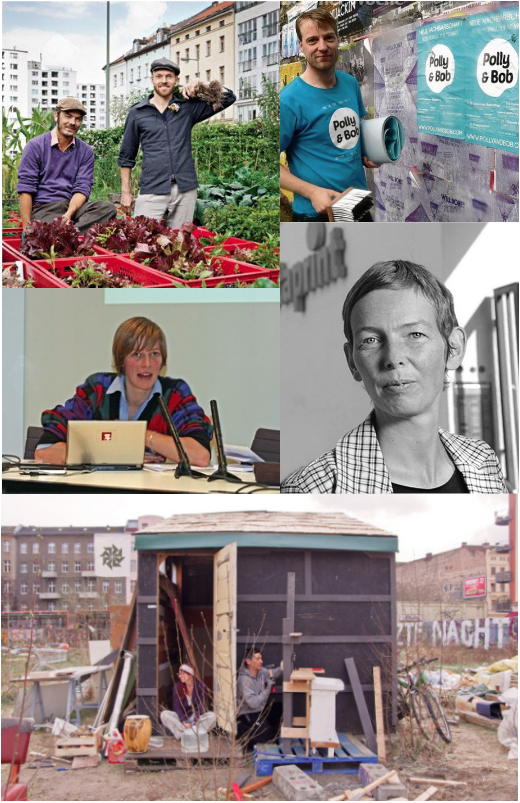
Grassroots urban innovation in Berlin, Germany
Between 2012–2015 I explored Berlin’s unconventional spaces. I focused on the founders of the projects, the people that supported their vision and the enabling characteristics of the city. I chose five case study sites that were contrary to conventional urban development processes. The projects were not profit seeking and the protagonists sought to create something that met human needs and aspirations rather than simply realising the maximum exchange value of space. They were aligned with the broader maker, hacker and open source movements and elevated the human experience and societal impact over material gain or permanency.
The research findings underlined the critical importance of some key characteristics in the project drivers as well as their social and spatial context in Berlin. The lessons learned are poignant to anyone interested in undertaking or encouraging entrepreneurship and innovation.
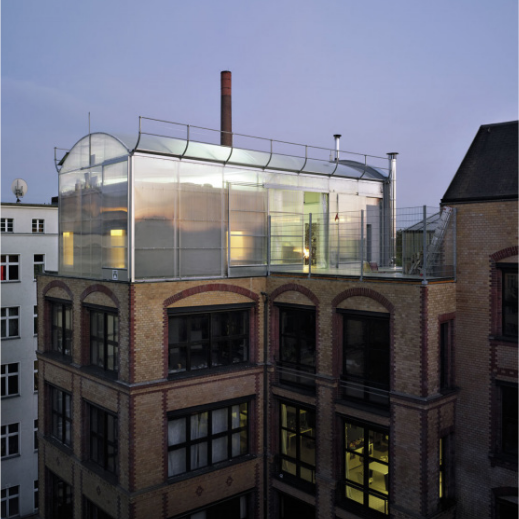
A space and time
The urban space intervention case studies emerged from a context with the absence of capital and onerous governance. The period after the fall of the Berlin Wall saw an abundance of vacant space free from restrictions by landowners and authorities. In addition, a number of contextual conditions were conducive to attracting innovators to Berlin including Berlin’s dense yet punctuated urban structure, a constant influx of young and creative residents, the emergence of countercultural and innovative urban clusters, affordability, the city’s undercurrent of alternative living and protest cultures, and the city’s famed identity as a ‘do-it-yourself’ mecca.
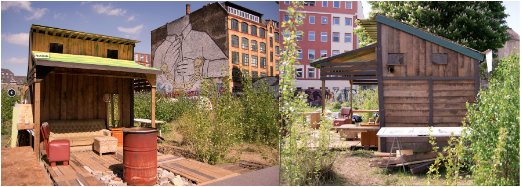
Social dimensions
The drivers of the case study projects had high levels of cultural capital. All of the projects relied on social networks of like-minded individuals. All of the case study protagonists had to develop new skills and knowledge to deliver their projects. Those driving interventions began the projects as novices — they were non-experts and acquired skills and knowledge as necessary through experimentation and experiential learning. A critical rejection of the status quo and aspects of their everyday lives drove their ambition to innovate.
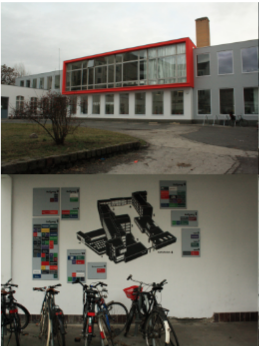
Innovation through ‘appropriation’
All of the case studies demonstrated that one must be in certain life circumstances to be able to critique and enact a vision that supersedes the status quo. The driving actors were free to pursue innovation and risk failure with the case studies because they were a stratum of people that had choices about the way they could sustain themselves and meet their basic needs.
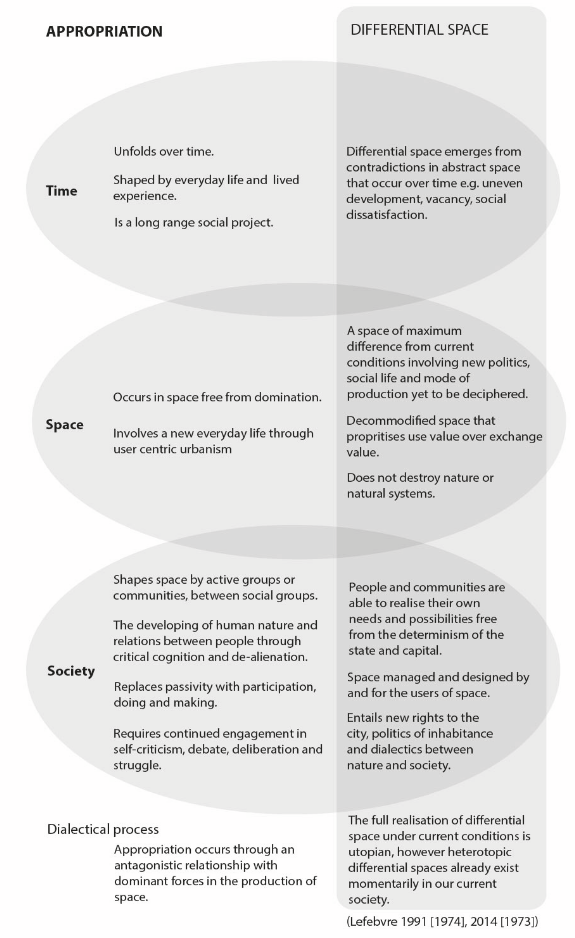
In Berlin, innovations of spaces unfolded through processes that demonstrated elements of Lefebvre’s concept of appropriation. Innovations emerged from a mix of social, spatial and temporal variables: Berlin’s context alongside central actors having space, time and visions driven by a rejection of the status quo and enabled by hands-on and experiential learning.
 Tina Gallico