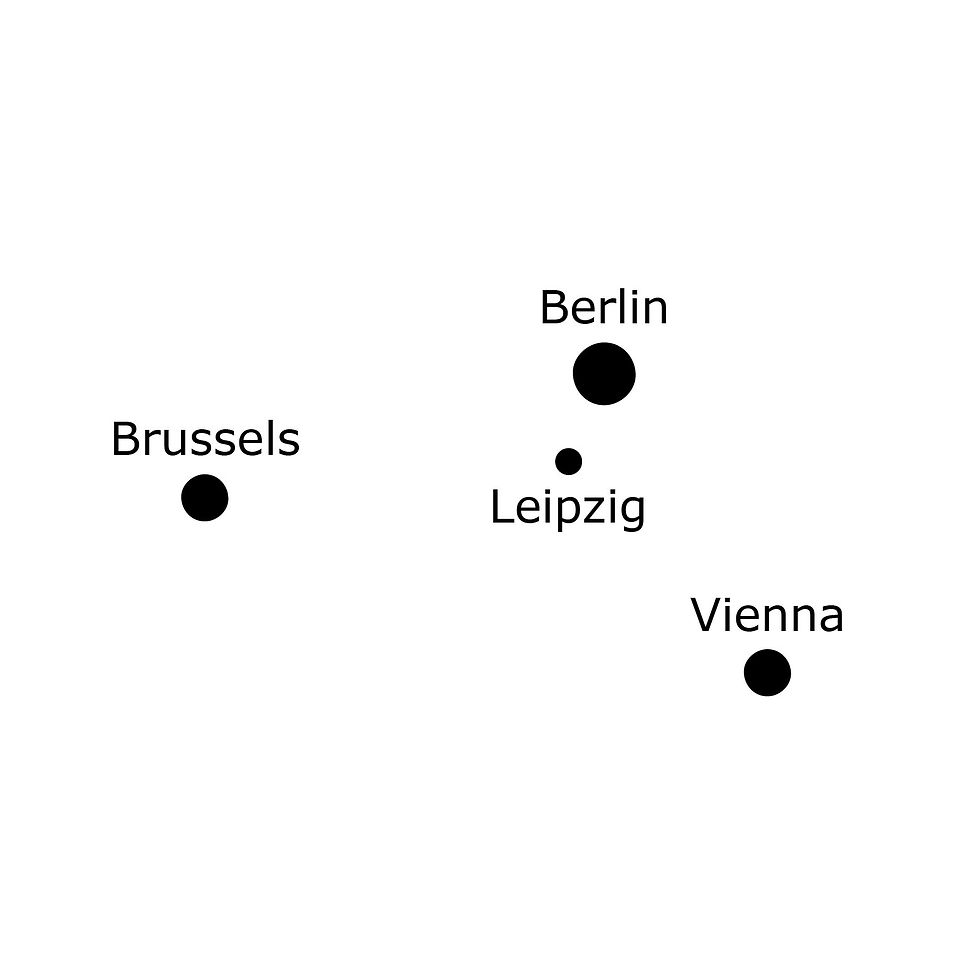
How can we ensure technological innovations in our cities and societies are human centric? At conferences and workshops in Vienna, Brussels, Berlin and Leipzig I’ve been extrapolating this question.
Vienna Workshop on Digital Humanism
I participated in a two-day workshop on digital humanism hosted by the Faculty for Informatics at TU Vienna to explore issues that are arising and ways we can ensure technological transformation does not disregard societal goals and the quality or potentials of the human experience. The international interdisciplinary program was attended by Trans-Atlantic academics including computer scientists, social scientists, engineers, economists and historians, as well as representatives from government and industry.
Key themes concerned the need for greater transparency and scrutiny of existing internet-based systems and their governance, the implications of the world wide web’s decentralised beginnings now transforming into concentrations of power and unequal global access, as well as ethical and legal challenges of big data and how it is affecting human rights and democracy.
Open Mobility Conference 2019, Brussels
The Open Mobility Conference was held in a former car production factory turned cultural and events space in central Brussels. The conference focused on finding ways forward to overcome barriers, as well as best practices so far, for building open ecosystems of mobility including the implementation of MaaS (Mobility as a Service) platforms in cities globally.
During the afternoon I delivered a workshop hosted by the Open Source Lab employing design thinking exercises to enable small groups to collaboratively ideate and pitch potential MaaS solutions.
Digital Future 2019 Science Match, Berlin
The Digital Future Science Match focused on ‘What’s next in Artificial Intelligence?’ Highlights included a keynote talk by Prof. Miriam Meckel providing insights into progress of her research regarding brain hacking, and Prof. Philipp Staab’s provocations on value creation and value extraction on digital platforms:
“What is happening is the increasing automation of the social. Complex social relations are translated into computable processes.”
International Transport Forum Summit 2019, Leipzig
The ITF Summit’s overarching theme was transport connectivity for regional integration. Volkswagen Sustainability Council hosted a half day workshop on commuter mobility and collaboration for new intermodal solutions. Representing the Open Source Lab, I co-hosted dialogue rounds to enable exchange on open data and open approaches in new mobility ecosystems and their governance.
Partnerships and linkages for systems change
Across the workshops and conference talks dealing with global challenges and opportunities of digital transformations it was clear that greater interdisciplinary and cross-sector partnerships that link diverse actors are needed. Achieving joint working between different types of actors and domains is far from mainstream. In larger organisations this might mean addressing knowledge fragmentation and industry silos and forging partnerships through open innovation. Both large and small organisations should look not only towards each other, but the broader community of potential collaborators that might not currently sit within a formal or institutional setting.
Digital humanism requires consideration of complex techno-social systems and conundrums. Only through ideating, problem solving, execution and feedback with collaborative interdisciplinarity and diversity can we drive forward technological innovations that optimise ingenuity whilst aligning with human dignity and potentials.
 Tina Gallico