How can data help make urban mobility more sustainable?
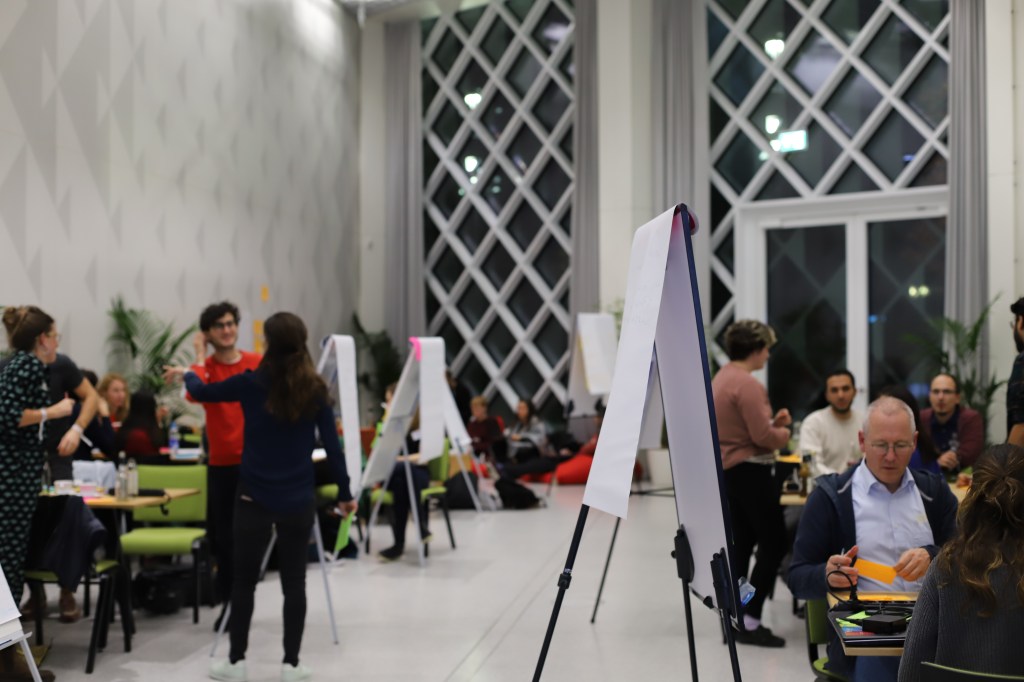
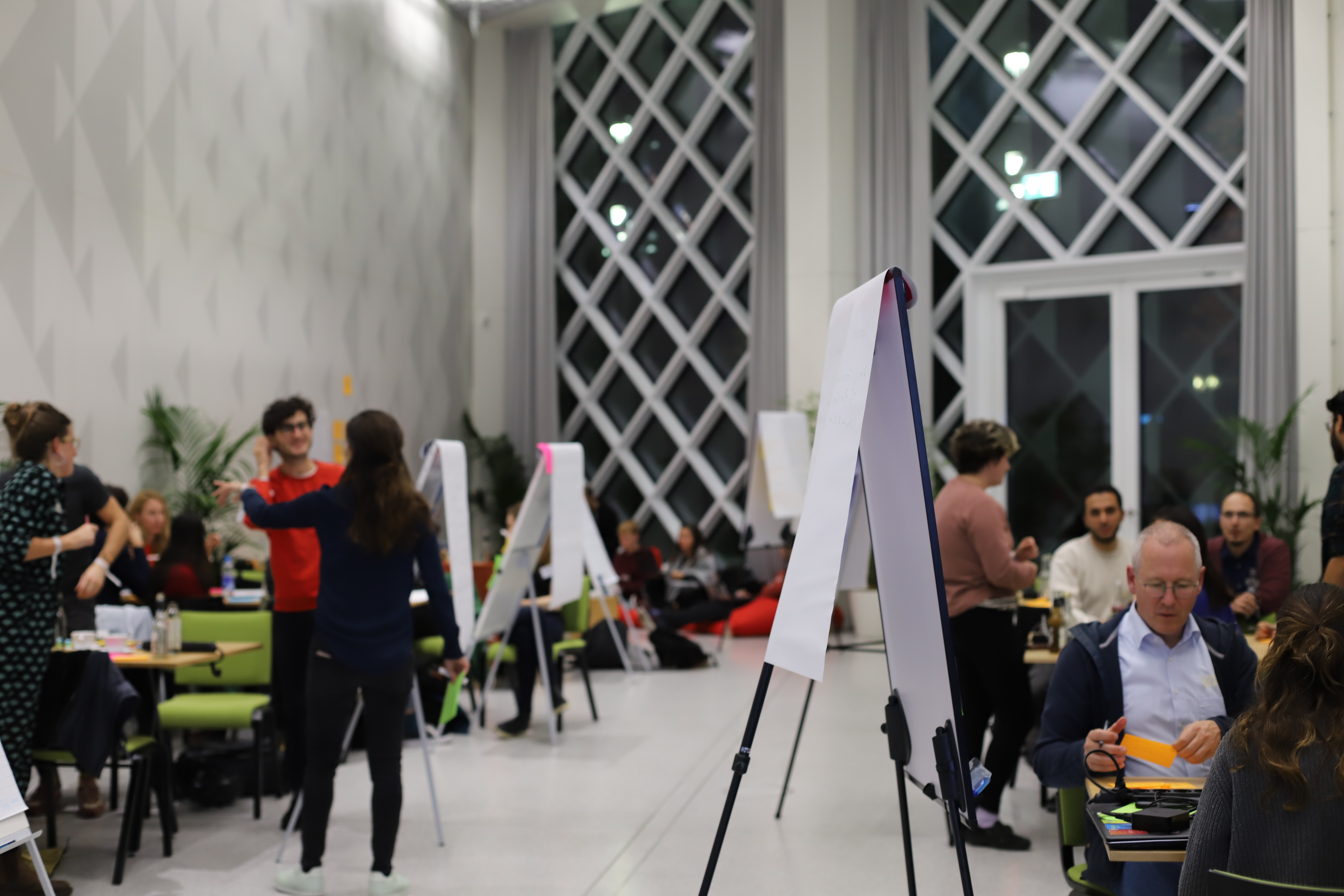
Unlike usual hackathons, the Climathon teams were extremely multi-disciplinary, with developers and computer scientists working alongside social and environmental scientists as well as policy and design oriented individuals. The teams worked through the night developing their ideas into manageable prototype concepts that could be pitched to the jury the next day as viable solutions if they were to be developed into working prototypes post-Climathon.
The solutions developed were: New Track, Tonspur Berlin, Switchy, Eco2me, Report and Ride, CloseTheGap.
New Track aimed to make walking in Berlin more attractive and safe by creating a user-centered app. With the help of data on air quality in Berlin as well as data on accidents, New Track can potentially reduce the numbers of car rides and make people opt for their own feet instead.
Tonspur Berlin proposed an app that makes walking in Berlin more interactive by providing pedestrians with real-time background information such as historical facts about locations. Walking could then ultimately appear more appealing to commuters of all kinds as they feel more connected to the city and their area.
Eco2me treats users with small rewards for more sustainable mobility behavior. The idea behind the project is to encourage users to switch to walking, cycling and using public transport instead of their car. Eco2me allows users to collect e-coins which they can use for a discount on a coffee during their bike/walking/train commute to work.
Report & Ride enables users to report any problems that ruin the cycling experience around the city — such as e-scooters dumped on the pavement, bumps in the road, traffic jams during rush hours and roadworks. The app combines different data sets to get a better understanding of areas in Berlin that are difficult, and potentially dangerous, to cycle.
Switchy proposed an app that shows users the closest park-and-ride car parks to make commuting from the countryside into the city easier and more convenient, showing the user’s CO2, time and money savings as a way to underline the value of public transport for individuals and the environment.
 Tina Gallico