Organisations working towards the broad adoption of open standards to ensure cities are able to optimise emerging technologies and solutions.
I recently hosted a public talk regarding the role of open standards in urban digitisation and the creation of ‘smart cities’. Below is a reproduction of a blog article I composed for the Open Source Lab to document the event.
Open Standards for Smart Cities
Cities are racing to provide ‘smart’ digital services in order to better meet the needs of citizens, be more efficient and improve their progress towards environmental, social and economic goals. In doing so they need to partner with an array of vendors (companies that create products and services), which are generally privately run and profit driven.
Open standards ensure compatibility between the different products and services of vendors that make up a city’s or organisations digital and physical infrastructure. They enable complementing goals to be realised, such as open data or universal charging connections, and for working solutions to replicate or scale without gatekeepers or barriers. Open standards provide a basis for partnerships between different stakeholders that avoid vendor lock-in.
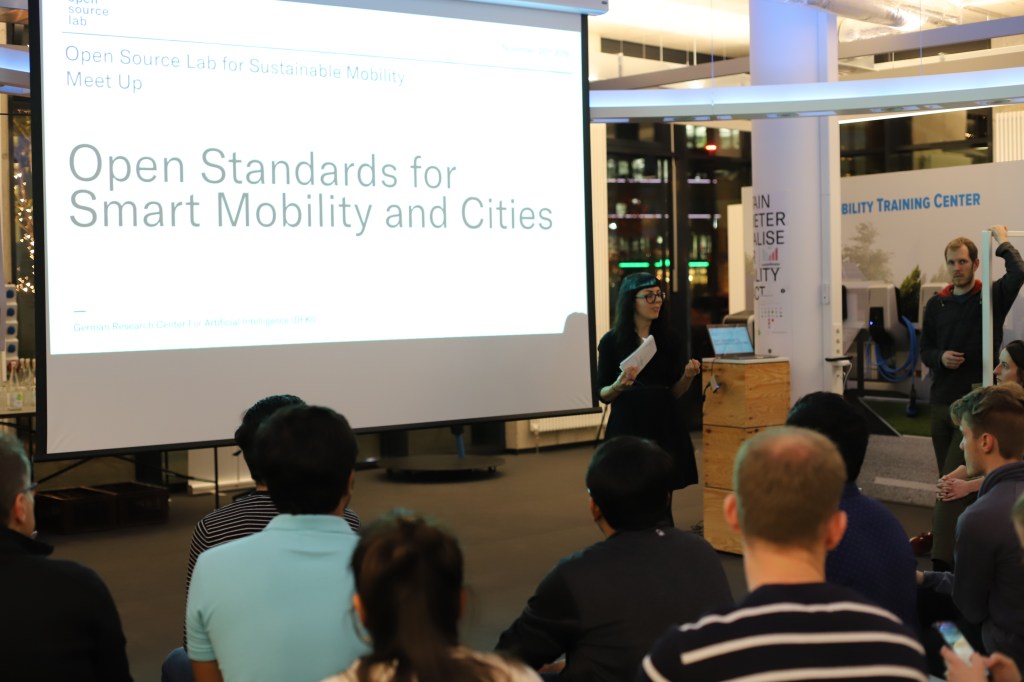
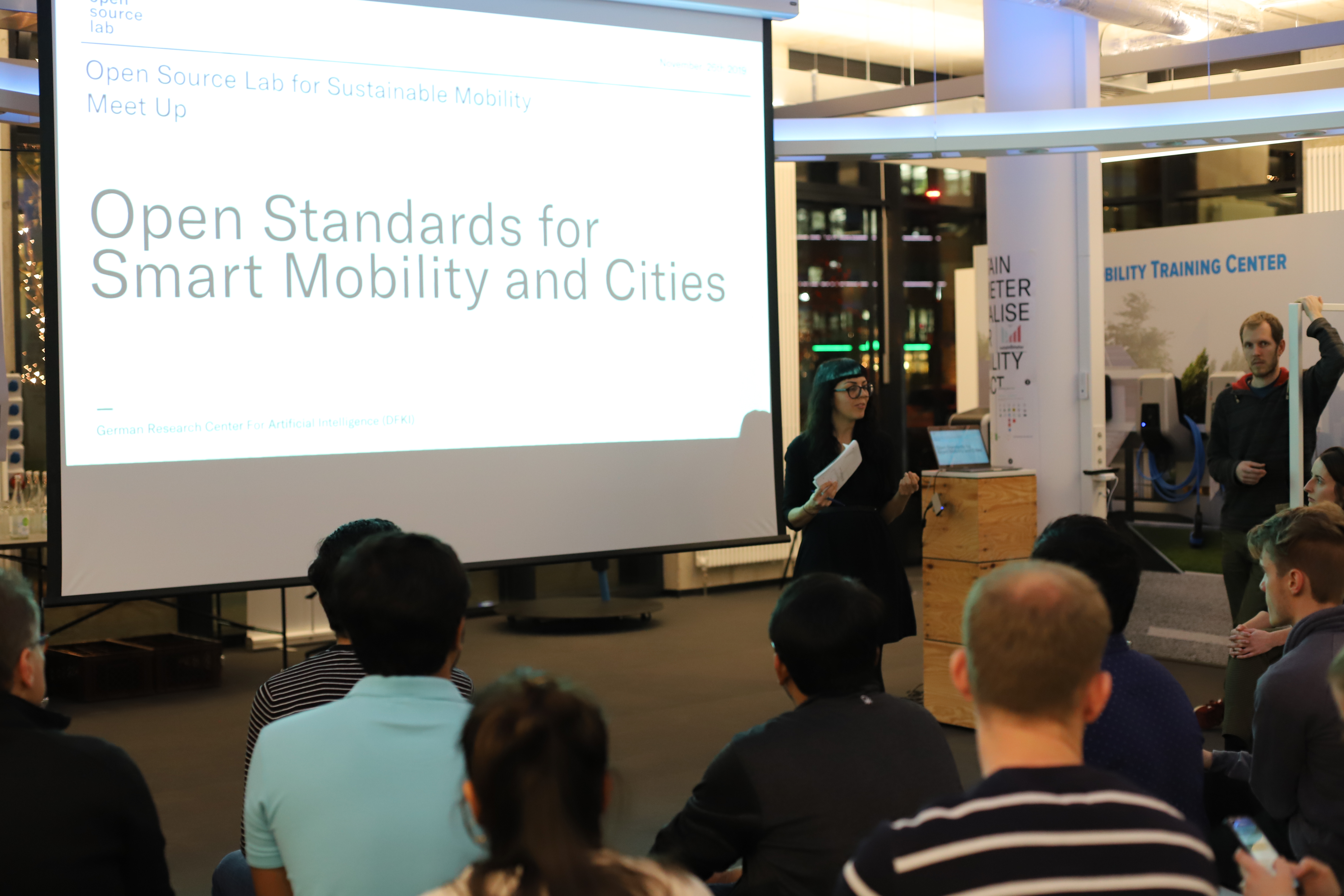
At the Open Source Lab’s Meetup event on the evening of Tuesday 26th November, the Lab’s guests explained activities they are working on to enable the development and implementation of open standards in Europe and around the world.
Lea Hemetsberger, Open and Agile Smart Cities (OASC)
Open and Agile Smart Cities (OASC) is a global community of over 150 cities building consensus on how to exchange solutions, services, and data. Lea spoke about how OASC are working to establish Minimal Interoperability Mechanisms (MIMs) — vendor neutral and technology-agnostic tools for achieving interoperability of data, systems or services.
Another central activity is the Global Smart Cities Alliance, which seeks to establish a new framework for technology governance through uniting municipal, regional and national governments, private-sector partners and citizens to establish global norms and policy standards for the use of connected devices in public spaces.
Dr.-Ing. Nikolay Tcholtchev, Fraunhofer FOKUS
Fraunhofer Institute for Open Communication Systems (FOKUS) undertake research, development and prototyping as well as advisory and consulting services including the formulation of the Open Urban Platform, an EU Project that created a reference architecture model for smart city solutions. The framework “uses open standards and interfaces to guarantee compatibility and interoperability with other systems and other urban platforms.”
 Tina Gallico