A new way to inspire discussion and imagine urban transport transformations.
After developing the sustainable and open mobility systems taxonomy I wanted to create a tool to enable greater engagement and understanding of the subject matter by diverse audiences in-person — from those already working in the transport sector to members of the public who are underinformed about the scope of challenges and opportunities urban governance should address for progress towards sustainability.
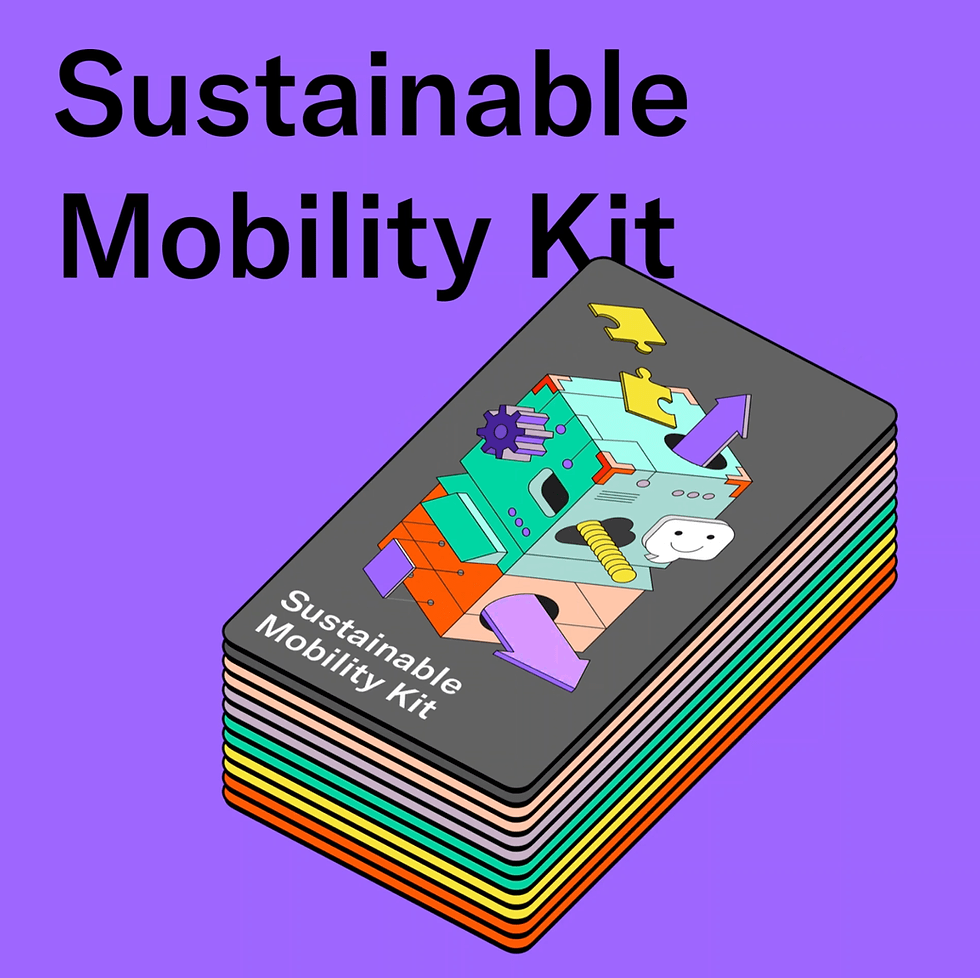
The research from the taxonomy formed the basis of the Sustainable Mobility Kit — a deck of cards to be used in workshops, collaboration and education settings to prompt discussion, ideas and new understandings regarding emergent urban transport systems components for sustainability. The futuristic abstract illustrations and graphic design by Olya Bazilevich add a welcome element of fun and simplicity to the complex topics at hand.
The cards are ‘open source’ — free to download, use or to be further developed.
New Prototype: Sustainable Mobility Kit
Building a shared vision is central to partnership building, participatory democracy and transformational innovation.
The Sustainable Mobility Kit is a workshop tool we’ve created at the Open Source Lab for facilitating collaboration, learning and speculative design about urban transport possibilities in cities. It is a deck of 23 cards that support group discussion and ideation activities. They situate open approaches including open data, open code and open innovation alongside conventional urban transport system components.
The Kit provides a snapshot of the complexity of 21st century urban transport systems, their challenges and opportunities. It seeks to incite stakeholders to reflect on, critique and construct the framework and concepts that could make urban mobility more sustainable and create open innovation ecosystems for the mutual benefit of diverse stakeholders.
Design your future
The cards can be used to generate strategic insights or more in-depth contextual understandings. Each of the 18 cards with icons represents a different part of a city transport system model that is open to diverse companies and public providers, has locally tailored solutions to transport challenges and pursues long-term sustainability environmentally, economically and socially. There are also 3 stakeholder cards that represent potential actor spheres in the ecosystem.
The graphic side of the cards can form the basis of simple card sorting activities by individuals or groups. The underside of the cards provides questions for group discussions, prompting more nuanced consideration of each theme.
 Tina Gallico