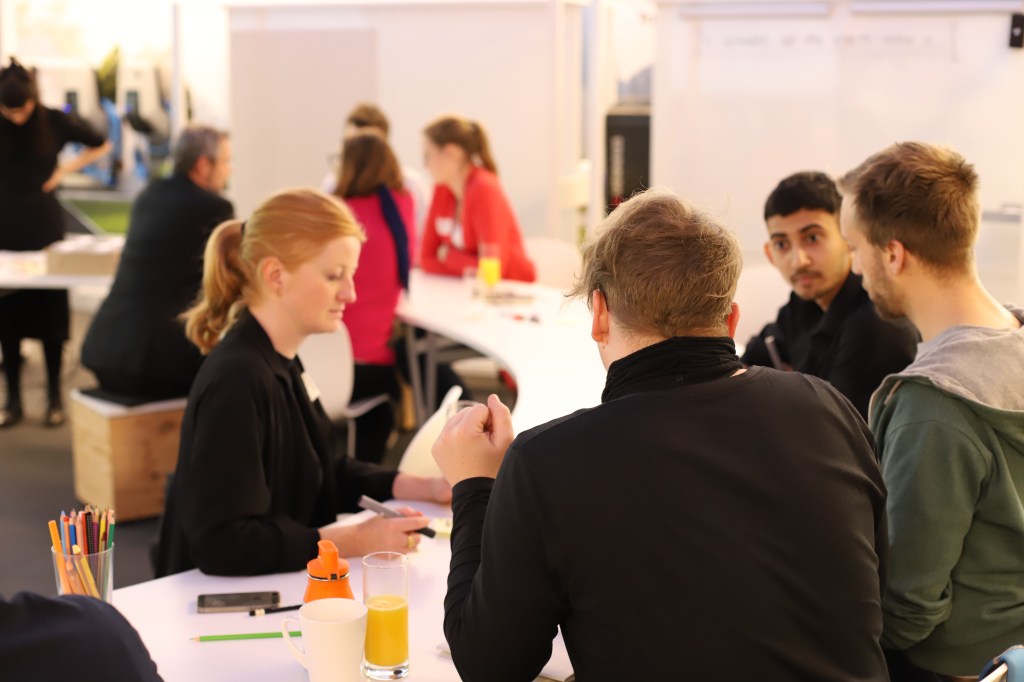
A workshop for identifying barriers to progress and imagining urban transport systems potentials with the Sustainable Mobility Kit.
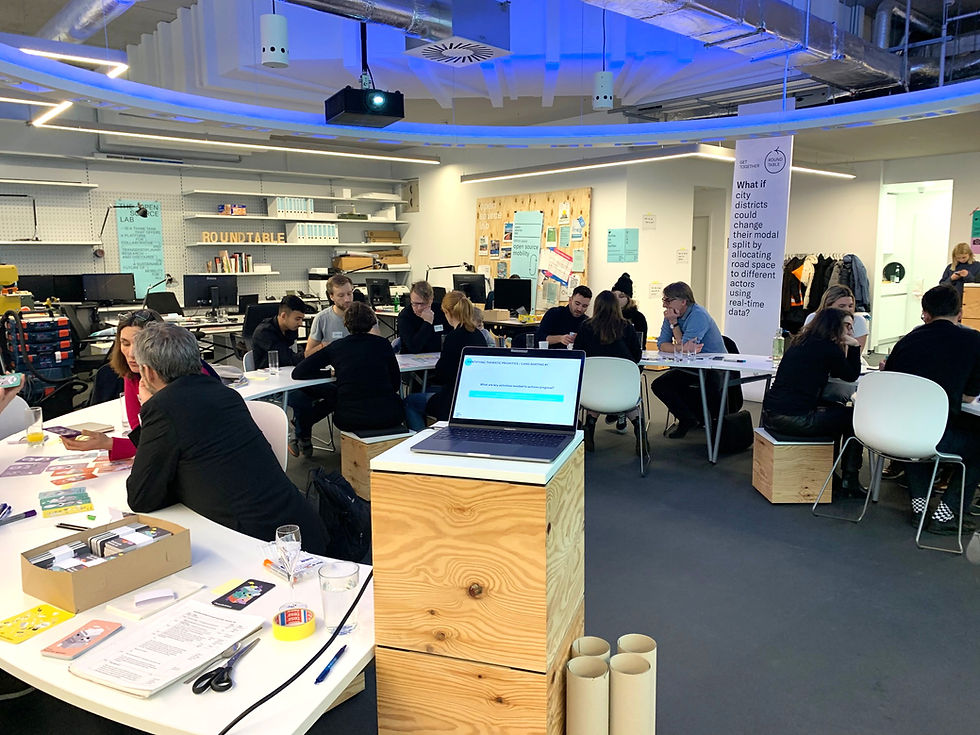
Last week I delivered a workshop based on the Sustainable Mobility Kit. It doubled as a user research session for me to ascertain feedback on the taxonomy of sustainable and open mobility conceptual framework, the card deck as a more accessible translation of that research and the complex themes within, as well as providing insights on the card deck as an education and creative thinking tool.
This workshop was two hours, however it could be a half or full day session. The latter would certainly be preferable to more meaningfully explore the challenges to sustainable digital transformations as they exist at multiple-scales, are context dependent and stakeholder perspectives are diverse.
Recap: Sustainable Open Mobility Workshop
The Open Source Lab launched the Sustainable Mobility Kit prototype with a collaborative workshop including experts in transport public policy, futures research and product design.
The workshop marked the publication of the Sustainable Mobility Kit. I developed the kit as a way to enable stakeholders to better understand and participate in inciting ideas about what the future of sustainable urban mobility could look like, particularly in light of digitisation processes underway.
Attending to provide expert input were special guests: Jakob Kluge, Research Associate, Institute for Futures Studies and Technology Assessment; Deborah Sillmann, UX Design Concepter, Volkswagen Group Future Center; Holger Dalkmann, CEO and Founder, Sustain2030.
The workshop started with introductions, followed by small group brainstorming, after which we discovered the similarities between different group’s ideas. After a short presentation about the development of the taxonomy and the Sustainable Mobility Kit, small groups were assigned card sorting exercises which highlighted the many links and priorities between different actors and components within a transport system. With some ‘how might we’ ideating and poster making, the groups communicated visions for how some of the challenges within the system might be addressed.
The feedback
The expert guests and workshop participants gave excellent feedback on the Sustainable Mobility Kit content as well as the workshop format. In terms of addressing the biggest challenges to sustainable urban mobility, topics that arose included missing political will and under investment in infrastructure for sustainable modes of transportation. Overall, we should also question how digitalisation transformations could help us to reduce or optimise demand.
The Sustainable Mobility Kit is, and will always be, a free resource for anyone to download.
 Tina Gallico