
When your parents never finished high school and work jobs like cleaning, the supermarket checkout and truck driving in suburban Australia, it’s unlikely you’ll be dining on your 21st birthday at a grand restaurant in Mayfair, London with your colleagues. But I did.
When the photo of you and your siblings on your first day of school is standing in a caravan park, because you’ve moved states and your parents are looking for work, it’s unlikely that your educational attainment will include a master’s and PhD. But mine did.
When you’re in a government job with a 9-day fortnight, no overtime and great working conditions, you’re unlikely to resign to follow your instinct that you should be creating things and move overseas, starting every aspect of life all over again (including the language). I did.
I always knew my surrounds were not my future. I insisted on changing high schools in grade 10 to one an hour from where we lived to better my chances of getting into university. I’d drive myself to school in the old sky blue Ford Laser hatchback I purchased with money from after school and weekend jobs (from pharmacy sales assistant to Toys R Us, to waitress at a Greek restaurant).*

I’d stay at my aunt’s house because it was closer to school. I liked it there. She had little tins of tuna and trail mix bags with chocolate chips inside for snacks. That was luxurious to me. Teenagers at my school were driving cars their parents purchased for them, travelling and living in homes that looked like TV sets. We’d moved most years and had one family holiday interstate my entire childhood. Sometimes my parents would need to borrow money from us if they were short for bills that week. I’m ashamed of it now, but I would lie to them and say I had none sometimes.
I was accepted into university without any tutoring or assistance outside of school. I worked part-time jobs even in my final year, which I regret now. I had a knack for last-minute studying and doing well in exams. I think now, imagine if I applied myself properly? I could have done… well I don’t know what. I wasn’t set on a career path. I didn’t know anyone in professions I aspired to and there was no career counsellor at school.** At the time my thinking was getting into university doing anything would mean my future was set. Never mind I had no idea what I would be best suited to. I just set my sights on the degrees that would qualify me to do a specific job. I was paying for my degree through government loans and I couldn’t risk graduating and then not finding a decently paid job.
I chose city planning because it seemed broadly interesting, I wanted a job that made the world ‘better’ and there was a shortage of urban planners. When it was time to do 12 months’ work experience, the standard path was to apply for roles available in Sydney, filling the positions of the previous year’s interns. After getting the placement for one of the most coveted roles at the State government Department of Planning, something inside me couldn’t do it. It was what everyone wanted, but I wanted to make the most of the work experience time by going overseas and travelling. I called the manager who interviewed me from a payphone and told them I was sorry for accepting the position, I was going to try to get a job in London instead. Then I spent months emailing offices and government authorities trying to secure one. By some miracle a boutique planning consultancy located in a stunning setting near Trafalgar Square replied. I left Sydney solo at 20 to live and work in central London.
I returned to Sydney to complete the final 18 months of my bachelor’s degree. I lived in a share house and worked a planning consultancy job on non-university days as well as selling vintage clothes I found at charity stores on eBay. My parents had moved to another state for affordability. I handed in my thesis and moved to London a second time, missing graduation day. I arrived without a job, savings or somewhere to stay. But that’s another story.
During the second stretch in London I completed a master’s degree. I funded and completed the master’s through working days in a local government authority doing strategic urban planning, 4-5 nights a week bartending in a Czech-inspired bar, whilst also attending class 2 afternoons a week and completing coursework. There was a social life squeezed in and travel to all the places I’d ever wanted to see in Europe. That period was the best time. I had full agency in life, to accomplish goals, and was excited about the future.
Then I met someone (who I eventually married and had children). We moved to Melbourne. A compromise location to live to be together; a city neither of us was from.
After a contracting role on a State Government research project, I secured a dream job at the City of Melbourne. It should have been where I built a career. The work and workplace were all you could ask for. Innovative policymaking, good salary, great coffee. But it just didn’t feel like I was doing what I was meant to. Like the roles I’d had before, I loved the period of getting to know the context and different challenges, but then the day-to-day pace and constraints felt unbearable. Another job where, after a year, I dreaded going in.
At that point I wanted to start my own thing. My partner and I got excited about making an architecture and urban planning publication. We called it aarchu.*** I started a blog, wrote a few posts, and when the audience didn’t materialise immediately, I concluded the idea must be wrong. I didn’t yet understand that building something takes time, resources and a lot of trial and error.
So I rationalised my way into a PhD. I’d get paid to work on ideas that could make a difference to transforming bigger systems, my degrees wouldn’t go to waste, and we could still save toward a home. We had been trying to enter the Sydney or Melbourne property market without family help. Win-win, I told myself. Surely academia would suit me better. Surely that would be the one.
Early in the PhD candidature at the University of New South Wales in Sydney, I was awarded a PhD research scholarship to undertake the fieldwork in Germany. My PhD was exploring citizen-led innovative projects in cities. I chose to investigate Berlin because it had many examples of do-it-yourself urbanism and culture, where people didn’t wait for permission or support from authorities or backers, instead reshaping the city themselves with built forms, uses and concepts. They were resourceful and figured things out as they went along. They may not have been profit-driven, but they created the first-of-its-kind solutions that solved problems. They were entrepreneurs. That was when I realised I was one of them. I’d been doing the same things all my life. I just needed to apply those skills to work. That’s the type of work I was meant to do.
It didn’t matter what my background was. I didn’t need someone to choose me. It didn’t matter if I failed, because at least in that case I would have spent my time building something that could make a difference in a job I was excited to do.
I had two children during the PhD (terrible, terrible combination) and I quickly discovered that academia wasn’t the type of work or financial security I’d thought it would be. In those years of interrupted sleep and researching the enabling factors for the case study projects, we lived in the white-tiled wedding-cake-style buildings on the main promenade of what was formerly East Berlin. The apartments were built to showcase the quality of life the GDR would bring.**** To enable people to live better. That’s what I wanted to do. I wanted to build things that could improve people’s lives. But it wasn’t the time; I needed my salary and at that point would have needed a technical co-founder to build something, as I wanted it to be technology-based.
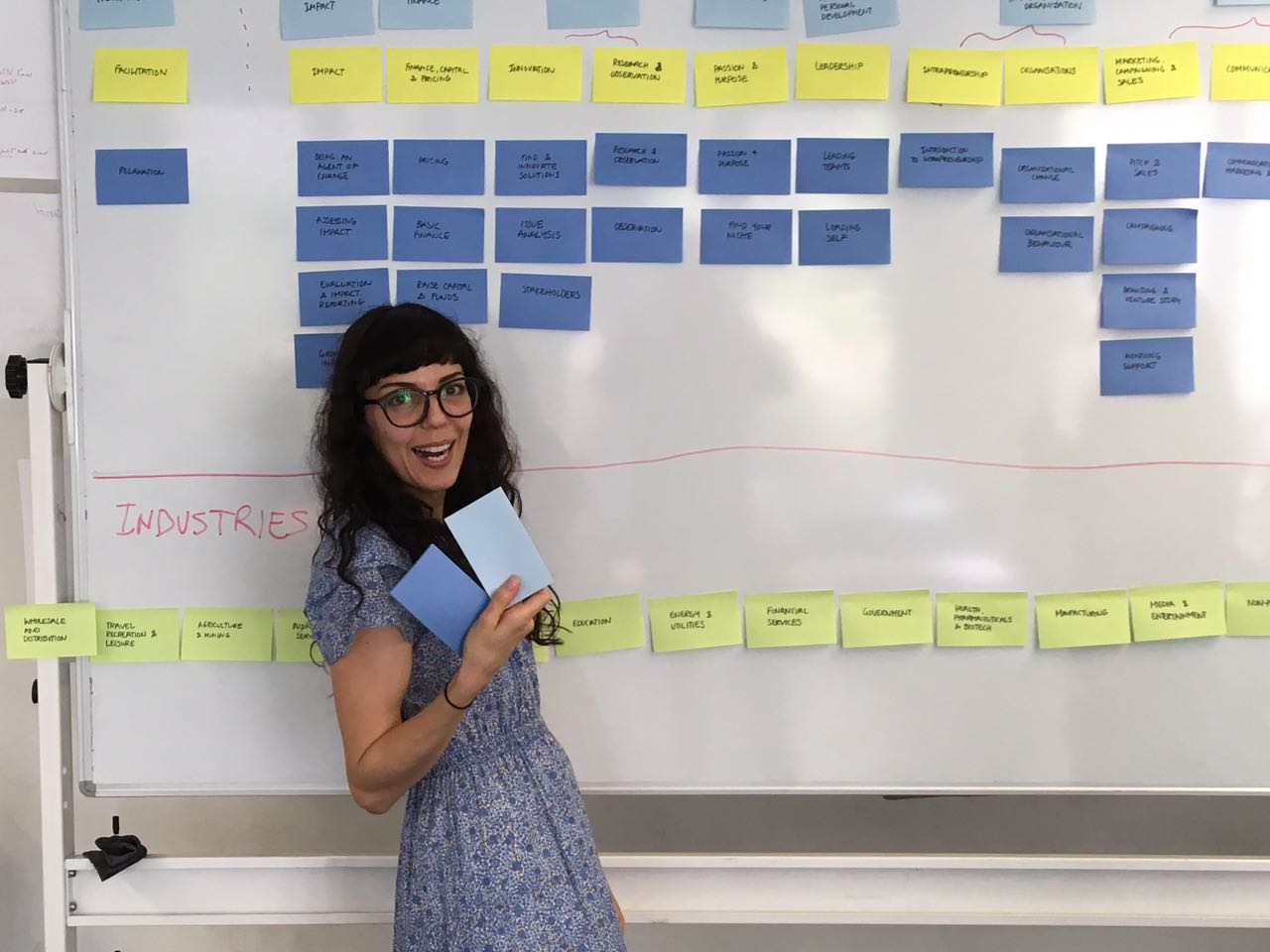
It turned out, though, that the post-PhD roles were key to developing the insights that led to Edaith: working with founders and staff in large companies on how to innovate, build a startup or enable organisational change; communicating complex topics, going deep on technology and building ecosystems; connecting disparate research across disciplines.
Those were signposts towards Edaith after countless times adapting to new contexts, not accepting the status quo and pursuing great work.
At CSIRO’s National AI Centre, I led research on Australia’s AI ecosystem, looking into hundreds of companies aiming to enable AI adoption. Almost all were selling technology. None were addressing the human side. That’s why I started Edaith. It was clear what I needed to do and urgent to rearrange my life to start building.
Edaith focuses on the skills that enable people to adapt and pursue their best work. The skills that support agency, so more people can be like those in my PhD research. They learned by doing, redesigned their life through self-defined occupations, and reshaped aspects of the city towards their social, economic or environmental ideals. The skills that have enabled me to traverse professions and countries.
Edaith is a bridge for those wanting to do more to shape their situation or surrounds, or those wanting to do differently.
Can a mother of three achieve their potential starting mid-life? I believe determination combined with adaptability is as enabling as specialisation. So, if anyone is likely to say ‘I did’ on that one, maybe it will be someone like me.
…
* One of my brothers, an apprentice mechanic, would help me choose a car and undertake the transactions. When the Laser was done, the next car I bought for getting to uni was an old Mitsubishi Sigma.
** My oldest brother had made it into university too and tried his best to give advice based on his experience.
*** I also didn’t know the key is to ask for feedback to make it more useful. A nice thing that’s happened from the spark there is that my sister-in-law saw the blog. In one post there was a photo I took in London of a DIY sign on a building that said ‘No ordinary life.’ In the time since she’s built a successful mountain biking brand using that as the tagline.
**** The socialist state quickly ran out of money and was unable to replicate the buildings on Karl-Marx Allee as planned.
 Tina Gallico